


The Aloe Plant - Historical Overview
The term Aloe derives from an Arabic vocabulary word, “Alua,” which means “bitter,” as the juice of this plant indeed is!
Aloe was called the “Plant of Immortality” by the Egyptians.
It was so important in their lives that it was planted at the entrances to the pyramids to indicate the Pharaohs’ path to the land of the dead.
It was also used as an ingredient in the preparation of mummification balms, as in the case of Pharaoh Ramses II.
The oldest document referring to Aloe vera is thought to be the Ebers Papyrus (approximately 1500 BC), which is currently kept at the University of Leipzig and in which 12 medicinal uses of this plant are described, for the treatment of various internal and external disorders.

But how many types of Aloe are there?
The botanical genus Aloe includes approximately 350 species worldwide.
They are evergreen plants, with fleshy foliage and elongated flowers whose color ranges from yellow to scarlet red.
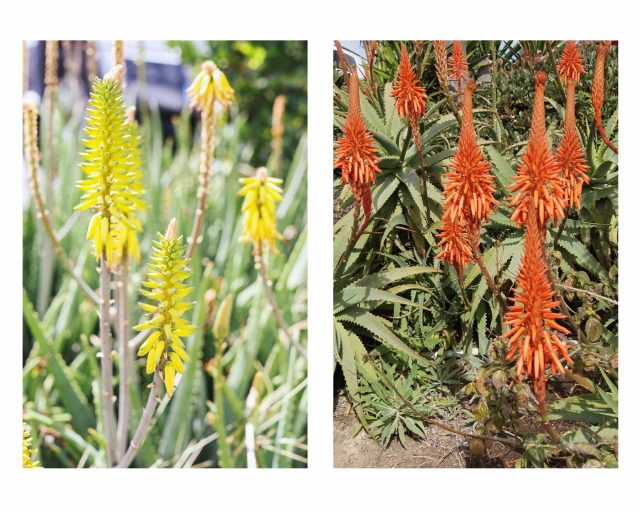
The species are very different from one another morphologically, but very similar in terms of their contents.
Thanks to their characteristics, the varieties most valued in herbal medicine, phytotherapy and cosmetics are Aloe barbadensis Miller (Aloe Vera) and Aloe Arborescens.
ALOE VERA
(Aloe barbadensis Miller)
Aloe Barbadensis Miller owes its name to the Barbados Islands.
It has been known for millennia for its medicinal properties: it is mentioned in the Old Testament, in the Gospels and in ancient documents that record the use of Aloe among the Chinese, Indians, Arabs and Egyptians.
It is a perennial plant with fleshy, succulent green leaves that are very rich in gel.
Aloe vera is the most widespread aloe variety, due to its high gel yield and the speed at which its large leaves develop, rather than to a higher content of active ingredients compared with other varieties.

The aloe vera juice, extracted from the pulp of the leaves, is a unique super-concentrate of benefits for the body.
It contains more than 300 nutrients, including vitamins, polysaccharides, monosaccharides, carbohydrates, mineral salts, enzymes and amino acids.
If you would like some more information about the properties of Aloe Vera , I recommend reading this dedicated article! 😊
ALOE ARBORESCENS
(Aloe arborescens Miller)
Aloe arborescens, compared with Aloe vera, has narrower leaves.
The woody stem and the lower water content in the leaf make this plant particularly resistant, even in less favorable climatic conditions.

The gel content is lower than that of the Aloe Vera: this means that the cost-effectiveness of the product is lower for those who produce it.
This is why Aloe Arborescens has so far found a smaller market.
However, as the most recent international bibliography demonstrates, its phytotherapeutic properties are undoubtedly superior to those of Aloe vera, which is why we at VonDerWeid have always preferred it for our products.
Aloe Arborescens is useful in the treatment of various disorders, including:
-
- stomach acidity
- ulcer
- gastritis
- flatulence
- redness
- acne
- dandruff
- rheumatism
- arthritis
- sunburn
- insect bites
- fungal infections
- uterine and intestinal polyps
It is also highly effective in counteracting the side effects of medications on the digestive system, and is also able to eliminate toxins accumulated in the tissues from the body, stimulating metabolism and the balance of human cells.
For external use, it is mainly used as protection against sunlight thanks to its soothing, moisturizing, and dermoprotective properties.
What is Aloe Arborescens rich in?
Aloe Arborescens is also rich in vitamins.
The most important are:
- Vitamin B12, which acts as an anti-anemic agent, is therefore essential in cases of a vegetarian or vegan diet, or during periods of convalescence.
- The vitamins A, C, and E give this plant antioxidant power, enabling it to combat metabolic alterations as well as free radicals.
It also contains 20 amino acids essential for humans, important for cell and tissue regeneration, also well known for their analgesic and anti-inflammatory properties.
Being so rich in vitamins, minerals, and substances that are extremely important for the body, Aloe Arborescens has many more active ingredients than all the other aloe varieties known and widespread throughout the world.
So, what are the properties of the components of Aloe Arborescens?
-
-
Immunomodulatory
Acemannan has a direct action on the immune system - Antibacterial, antifungal, and antiviral
-
Anti-inflammatory
It has a calming and soothing effect on inflamed and painful tissues -
Gastroprotective
normalizes the structure and function of the gastrointestinal wall. Improves the intestinal bacterial flora, reduces abdominal spasms, and helps improve gastritis, ulcers, and irritable bowel syndrome -
Healing
action complementary to the anti-inflammatory action, it facilitates skin healing and re-epithelialization - Hypoglycemic
-
Immunomodulatory


