


Aloe Vera, a remarkable plant known for its numerous beneficial properties, owes these benefits to the valuable gel found inside its leaves.
It can be used externally for the beauty of the skin and hair, as well as internally for its strong gastroprotective properties; it is also an excellent Food Supplement thanks to its high concentration of important micronutrients.
Let’s discover together everything there is to know about Aloe leaves and the gel inside them.
Aloe Vera, what is it?
Aloe Vera is a perennial, xerophytic, monocotyledonous succulent plant with a shrub-like growth habit, belonging to the Asphodelaceae family, and can grow up to one metre tall. It is a self-sterile plant, so it reproduces exclusively through cross-pollination.
The plant grows from the ground, starting from a seed or its offshoots.
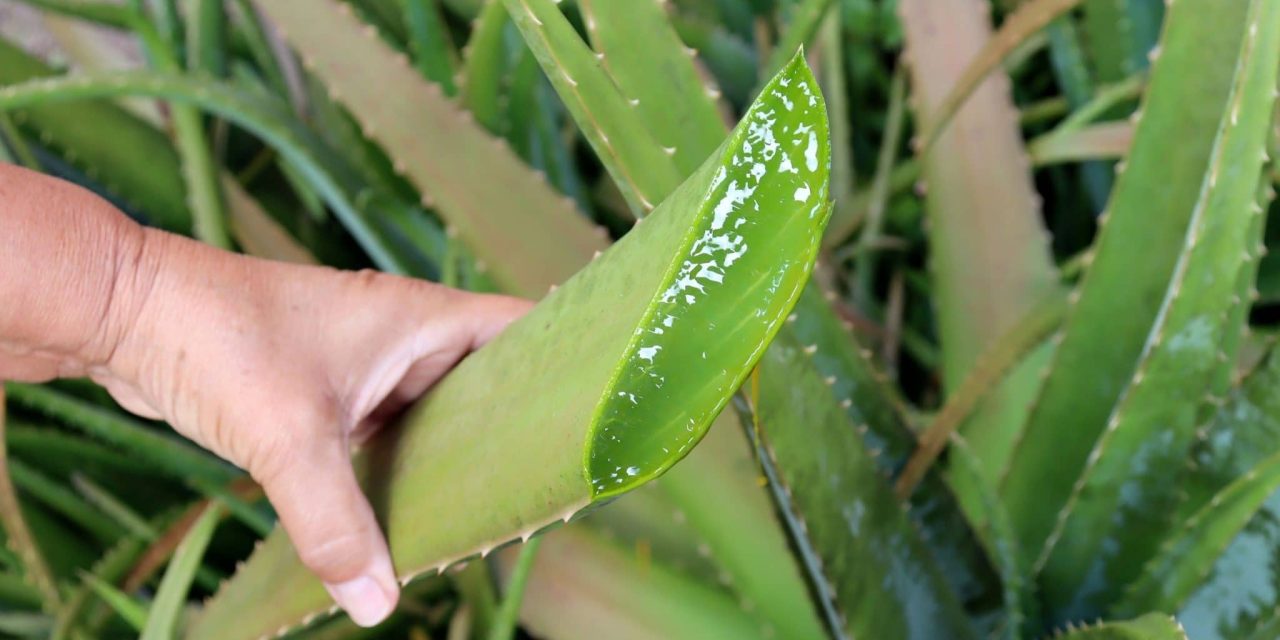
The Aloe Vera leaves, which contain the valuable gel inside, grow in a rosette with a lanceolate shape and are on average 40 to 60 cm long. They are spotted during the growth phase, while they tend to become green during adulthood.
It is very important to wait until the leaves reach maturity, around 6/7 years of age, before using them as an ingredient in juices or cosmetics; otherwise, they will not have fully developed all their active ingredients.

Aloe Vera leaf, what is it like?
The Aloe Vera leaves consist of 2 structural parts, namely the outer green skin, which together with the mesophyll makes up the outermost layers, and their aqueous parenchyma, composed of the famous “Aloe Vera Gel”, which in turn has a more liquid component and a more fibrous component rich in pulp.
From these two parts two extracts, very different from each other in terms of color and properties, can be obtained from the structural parts:
- The Aloe Exudate is obtained from the outermost part. It is rich in Aloin and anthraquinone compounds, and is commonly used as a bittering agent in Spirits or as an ingredient in Medicines for laxative use. In this regard, the European measure issued in 2021 is thought-provoking: it limits the presence of Aloin to 1 PPM in Food Supplements, while its presence in Medicines and/or Spirits is not limited.
- The “Aloe Gel” is obtained from the innermost part, also called “Juice” or “Pulp” of Aloe, and is used mainly in cosmetics and as a drinkable Juice because of its nutritional richness.

Aloe Vera Leaf: How to Use It?
Leaving aside the Aloe Vera Exudate, or Condensed Aloe Vera Juice, which contains numerous active compounds with an anthraquinone, anthrone and chromone structure, among which the most important and well-known is certainly the anthrone aloin (sometimes called barbaloin or soccotrine), commonly used as an ingredient in Medicines, Food Supplements or Alcoholic Beverages, the most widely used part is its Inner Gel.
At AloeVonderweid, we have specialized in the cultivation and processing of Aloe Vera for more than 25 years. We use the inner gel both in cosmetics, with our Soothing Gels, and in nutrition, with our Aloe Juices, notified to the Ministry of Health as Food Supplements.
However, it is very important to handle Aloe Vera Gel in the best possible way, as it is highly unstable, to prevent it from oxidizing or rotting, which would lead to the deterioration of its active ingredients.
The gel, immediately after being extracted from the leaf, must be used within a limited period, or it must be stored and/or stabilized correctly for future use.

What does Aloe Vera Gel contain?
Aloe Vera Gel, extracted from the central fleshy part (the aqueous parenchyma) of the leaves, contains numerous components that can be grouped into 3 broad groups:
- Complex Sugars or Glucomannans: polysaccharides made up of glucose and mannose, they retain water inside the plant and give the gel moisturizing and gastroprotective properties. The most active glucomannan is Acemannan, particularly concentrated in the leaves of Aloe Arborescens, and extensively studied for its immunostimulant properties. According to some studies, it could increase the activity of macrophages, which are responsible for eliminating toxins and metabolic waste, by up to 10 times..
- Anthraquinones: although they are more concentrated in the rind and present in much lower amounts in the gel, below legal limits, these compounds are responsible for the laxative effect and give the product a bitter taste.
- Micronutrients: Aloe Vera Gel contains:
– Mineral Salts: Chromium, Iron, Phosphorus, Magnesium, Manganese, Potassium, Copper, Selenium, Sodium, Zinc
– Vitamins: Vitamin A (Beta-Carotene), Vitamin B1 (Thiamine), Vitamin B2 (Riboflavin), Vitamin B3 (Niacin), Vitamin B6 (Pyridoxine), Vitamin B9 (Folic Acid), Vitamin B12 (Cyanocobalamin), Vitamin C (Ascorbic Acid) and Vitamin E (Tocopherol)
- Enzymes: they mainly have an anti-inflammatory effect and promote the digestive process. Among them are amylase, bradykinase, carboxypeptidase, catalase, cellulase, lipase, protease and transaminase.
- Amino acids: aloe contains all 8 essential amino acids, useful for many bodily functions, which humans cannot produce independently and must obtain through their diet. These amino acids are: Isoleucine, Methionine, Lysine, Leucine, Phenylalanine, Tryptophan, Threonine and Valine. Aloe also contains non-essential amino acids such as Arginine, Histidine and Alanine, which are also very important.
- Saponins (detergent substances with antiseptic, antibacterial and antimicrobial properties) and lignins (substances highly valued in Cosmetics that allow aloe gel to penetrate deeply into the less superficial layers of the skin)
Benefits of Aloe Vera Gel?
Aloe Vera Gel, rich in active ingredients and nutrients, is used both in Cosmetics for the production of creams and gels with soothing, moisturizing properties and for reducing redness, and in the field of Nutrition in the form of Pure Juice to drink for its nutritional, gastroprotective and laxative properties.
More specifically, Aloe Vera Gel has the following benefits:
- Detoxifying agents: can detoxify the body of toxins. The saccharides present in the gel adhere to the intestinal walls, forming a protective barrier that prevents the absorption of harmful substances.
- Laxatives: can stimulate the bacterial flora and promote the elimination of waste, improving the absorption of nutrients.
- Immunostimulants: thanks to the presence of Acemannan, it can regulate immune responses to infectious or sensitizing agents.
- Healing: a quality due to the presence of polysaccharides derived from mannose, which stimulate macrophage activity, enhance collagen synthesis and increase cell regeneration.
- Coagulants: it can rapidly repair tissues and membranes, which is why it is used not only on burns but also on wounds, eczema and blisters, to accelerate healing.
- Soothing: it offers immediate relief from mosquito and other insect bites, as well as sunburns.
- Nutrients: thanks to the high concentration of Mineral Salts, Vitamins, Enzymes and Amino Acids.
Aloe Vera Leaf, where can you buy them?
Aloe Vera Leaves are rarer and more difficult to find than Juice or Aloe Vera Gel, products commonly found in Herbalist Shops and Pharmacies. However, thanks to the Internet and E-commerce, it is possible to contact and purchase Aloe Vera Leaves from specialized growers.
To choose where to buy Aloe Vera Leaves, it is very important to consider these 2 aspects:
- Type of cultivation: greenhouse cultivation with potted plants, which is easier to develop and maintain, does not allow Aloe plants to grow optimally and vigorously and, consequently, does not allow the optimal development of the Inner Gel. On the other hand, open-field cultivation, mainly developed in Southern Italy, allows the optimal growth of the Plant and its Leaves, as also demonstrated by scientific studies. We therefore recommend choosing open-field Aloe Vera cultivation.
- Plant age: for the plant to be considered Mature, with the optimal development of its active compounds, it must be at least 6/7 years old.
The price of Aloe Vera Leaves varies considerably, but is generally around 9/10 euros per kilo. At first glance, this may seem like a high price, but choosing Aloe Leaves rich in gel can provide a good yield.
Storing Aloe Vera Leaves:
Aloe Leaves can be stored in the refrigerator if they have first been washed and cleaned, for a few days without any risk of deterioration. To store them for longer, even for months, they should be placed in the freezer inside a transparent bag.
The Inner Aloe Gel is a different matter: since it is very unstable once extracted, if it is not stored carefully, it may oxidize or spoil. It is therefore recommended either to use the gel immediately after extraction or to store it in the freezer, preferably inside the classic containers used for ice cubes.
How to cut an Aloe Vera Leaf and extract the Gel?
Correctly cutting Aloe Vera Leaves to extract their Inner Gel is not very complicated and requires just a few precautions. The steps to follow are:
- Clean the leaves as thoroughly as possible, perhaps with a damp sponge
- Remove the thorns from the outer edges
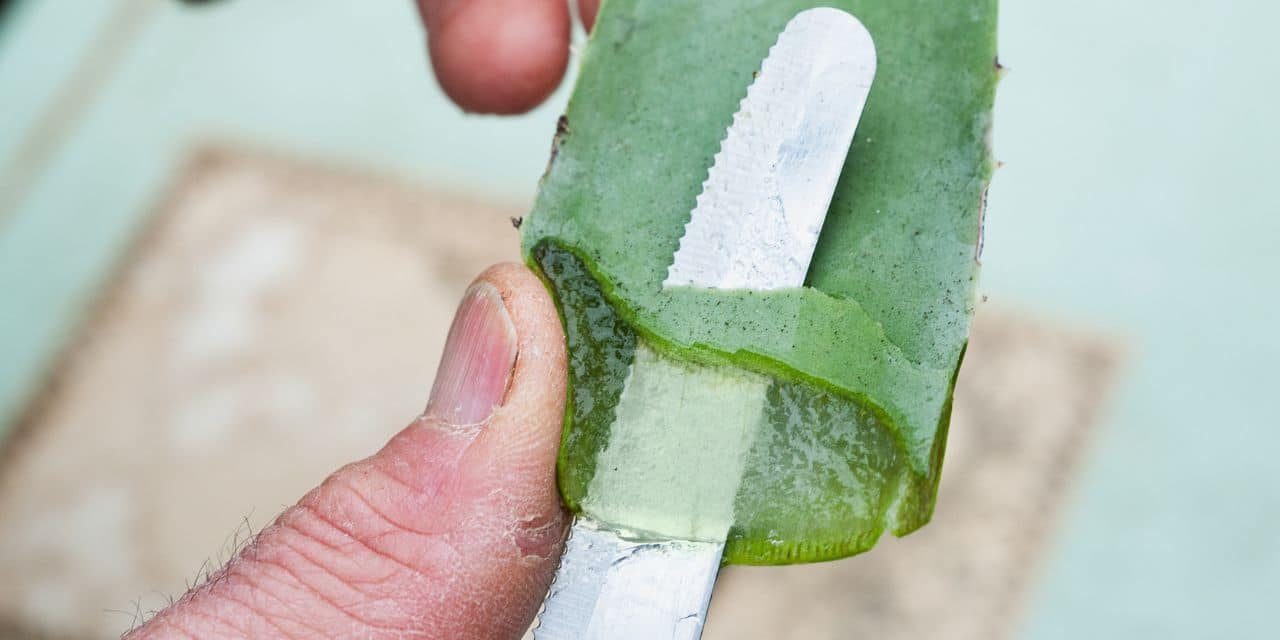
- Fillet the leaf away from the outer parts to remove them (a yellow/transparent gel should remain)
- Extract the central part and squeeze or blend it, depending on your needs.
By carefully following these steps, it is possible to recover all the phytotherapeutic molecules of interest as effectively as possible, which can give the gel the desired benefits.
Uses of Aloe Vera gel:
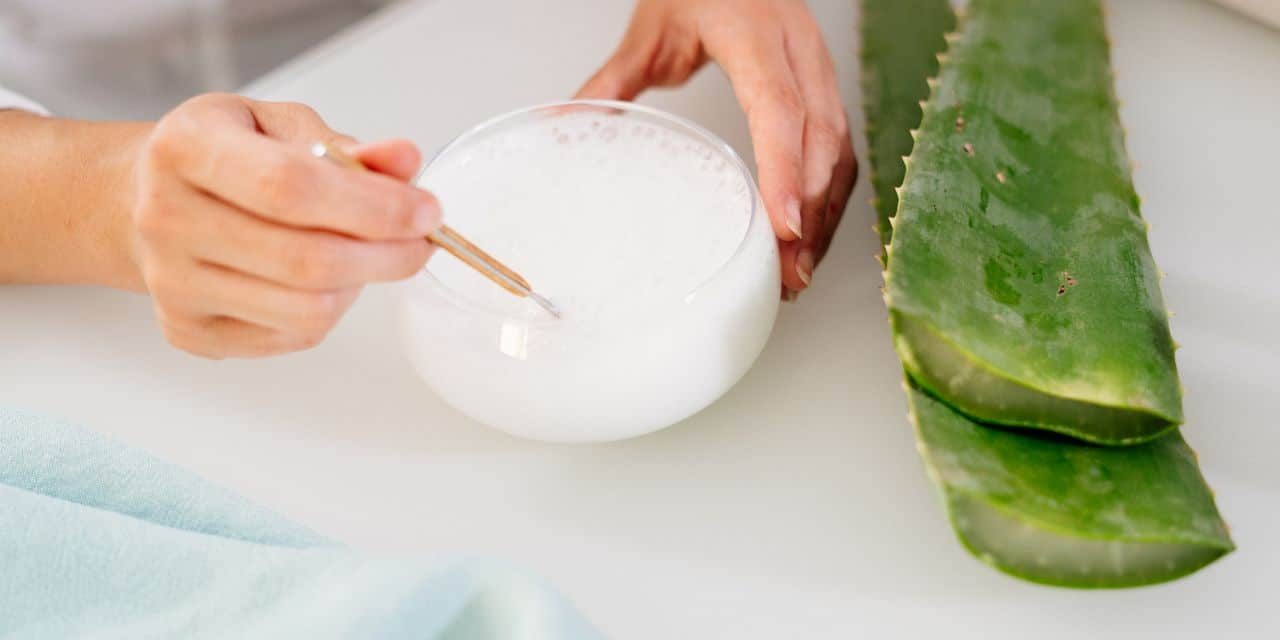
Aloe Vera Gel can be used as an ingredient in various products, mainly Cosmetics (Gels or Creams) and Nutritional Products (Juices or Food Supplements)
For cosmetic use, the Gel can be used as a Remedy for Burns caused by the sun, as a Hair Pack to make hair soft and shiny, for Acne or Dermatological problems thanks to its anti-inflammatory and healing properties, for Inflamed Gums, Insect Bites, and also as a Natural Mouthwash.
For Nutritional use, as well as for Internal use, Aloe Vera Gel (also called Juice in this case) is very useful for its nutrient-rich and remineralizing properties (given the countless micronutrients it contains), as well as its detoxifying and gastroprotective properties (thanks to the action of certain compounds, including Acemannan).
How to Make Aloe Vera for Drinking and When to Drink It?
To make Aloe Vera Juice at home, simply purchase some Mature Aloe Vera Leaves, extract the Inner Gel and blend it in a blender to “break it down” and obtain a more liquid substance. At this point, if you do not like its taste, you can add other Fruit Juices to make it more enjoyable.
The best and most recommended time to drink Aloe is certainly before meals, preferably on an empty stomach.
Types of Aloe Juices:
On the shelves of Pharmacies and Herbalist’s Shops, as well as online, you can find thousands of Aloe Juices supplied by various brands.
However, care must be taken when choosing the best Aloe Vera Juice, as most “famous” or otherwise more visible Aloe Juices contain Aloe Gel sourced from outside the EU (often from South America). Consuming a raw material from outside the EU is not a problem in itself, except for the fact that most of the time it is imported as a Concentrate or even as Powder (up to 1X200), which is then reprocessed to turn it into Aloe Juice.
All these industrial processes tend to damage the raw material and cause it to lose some of its active compounds and benefits.
It is therefore important to select Aloe Vera Juice that has undergone as little processing as possible.


