


Aloe Arborescens is a plant native to Africa, used for centuries as food and as a natural remedy for its countless nutritional and healing properties.
Let's discover it together.
Aloe Arborescens Plant, the “cousin” of Aloe Vera:
Native to South Africa, Aloe Arborescens Miller is a succulent plant, known for its many phytotherapeutic properties.
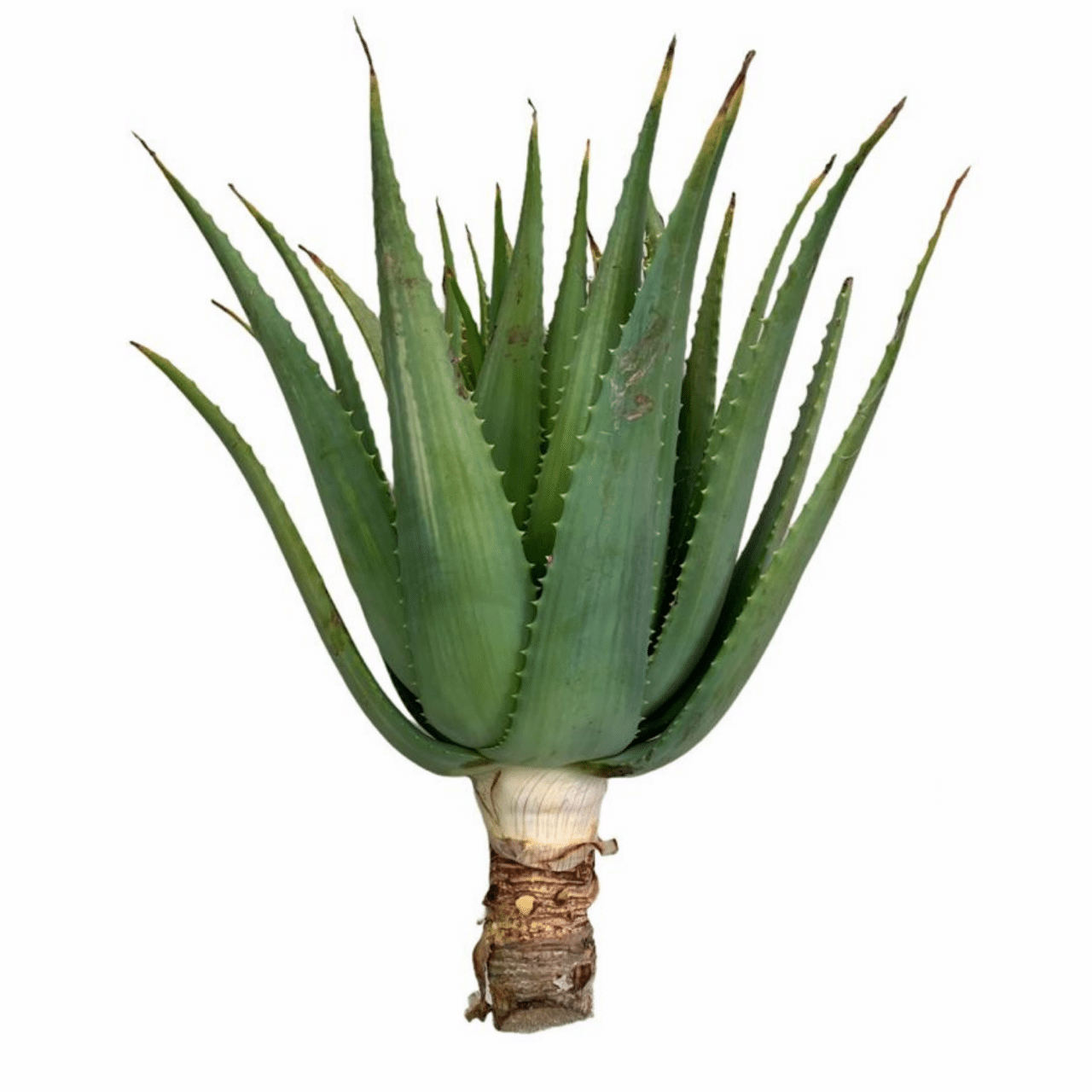
The Aloe Arborescens has long, lanceolate, serrated and spiny leaves arranged in a rosette, which swell and shrink to withstand even very long periods of drought. As it is also a xerophytic plant (plants adapted to living in environments characterized by long periods of drought or an arid or desert climate), it manages not to lose water either through its stomata or through any wounds, thanks to a special self-sealing gel.
There are also substantial characteristics that distinguish Aloe Arborescens from Aloe Vera: in fact, you should know that Aloe Arborescens is much more concentrated in active compounds than Aloe Vera, with some of them 3 times higher.

Aloe Arborescens Miller vs Aloe Vera Barbadensis
This distinctive plant is often mistakenly confused with its more famous “cousin,” called Aloe Vera (Aloe Barbadensis Miller).
At first glance, they may seem similar, but on closer inspection, important differences can be noticed, such as:
- Leaves: the leaves of Aloe Arborescens are much lighter and less watery (they contain less water and are therefore more concentrated in active compounds), while the leaves of Aloe Vera are plumper and larger (they can weigh up to 2 kg) but, as they contain more water, are less concentrated in active compounds.
- Flowers: The flowers of Aloe Arborescens are red, while those of Aloe Vera are yellow.
- Shape: thealoe vera grows as a clump and has a clearly visible original root,aloe arborescens has a chaotic central trunk rich in stems; in fact, it is not possible to identify the root.

Aloe Arborescens Cultivation:
Aloe Arborescens cultivation is not very widespread compared with Aloe Vera cultivation, where there are operations, especially in South America, with hundreds of cultivated hectares.
The main Aloe Arborescens cultivations are found in Italy and Spain, although they are more widespread in Italy.
However, in Italy, greenhouse cultivation of Aloe Arborescens is very widespread, but it does not allow the plant to grow optimally and vigorously. It is very useful for growing ornamental potted plants; however, it is not optimal for the plant's qualitative growth because it has in fact been demonstrated that the development of certain active ingredients and phytocompounds in the plant is correlated with the amount of light the plant receives.
Furthermore, in an enclosed environment such as a greenhouse, air quality is certainly different from that found in an open ecosystem.
AloeVonderweid's Aloe Arborescens cultivation protocol:
At AloeVonderweid, we have been growing Aloe Arborescens in Sicily since way back in 1997, using Sustainable Agriculture techniques.
In fact, we do not use chemically synthesized substances such as fertilizers, insecticides and herbicides, fungicides and pesticides generally.
If necessary, substances of natural origin can be used, such as specially selected plant extracts, insects and minerals which, dispersed across the soil, alter its chemical and physical characteristics, helping to create a more protected environment for our plants.
Aloe Arborescens, chemical composition?:
After the 1940s, following the increasingly frequent positive results obtained from using this plant, an intense research effort began, allowing science to establish the chemical and physical characteristics of Aloe Arborescens precisely.
This research has progressively expanded, with the aim of uncovering every secret of the complex composition of the organic molecules and individual active compounds of this plant.
We currently know that Aloe Arborescens leaves contain more than 200 active compounds, while its juice contains around 160 active compounds.

A gel can be extracted from the mature leaves of Aloe Arborescens plants (they must be at least 6/7 years old), which is consumed for its countless properties and benefits.
In Aloe Arborescens gel, also called Aloe Arborescens Juice (not to be confused with Aloe Arborescens exudate), we can find, in addition to the normal water content:
- Essential Amino Acids (7 of the 8 essential ones)
- Vitamins: A,B1,B2,B3,B6,B12,C,E,N, Choline, Niacin,
- Mineral Salts: Calcium, Phosphorus, Potassium, Iron, Sodium,
- Manganese, Chlorine, Magnesium, Copper, Chromium and Zinc
- Enzymes
- Polysaccharides
- Lignins and Saponins
- Aloetic Acid, Anthranol, Antrocele, Aloe-Emodin,Isobarbaloin, Chrysophanic Acid, Aloe Ulcine,..
All these elements are present in Aloe Arborescens in a balanced ratio, making it a health elixir.
Aloe Arborescens Juice: what are its properties and benefits?
Some of the beneficial properties of Aloe Arborescens juice include:
- Healing power: Aloe arborescens juice contains compounds that may help accelerate the wound-healing process and reduce the risk of infections.
- Anti-inflammatory activity: Aloe arborescens juice may help reduce inflammation in the body, which may be useful in treating chronic inflammatory diseases such as arthritis.
- Antioxidant power: Aloe arborescens juice contains antioxidants that may help protect the body's cells from damage caused by free radicals.
- Purifying action: Aloe arborescens juice may help cleanse the blood and improve digestion by promoting the elimination of toxins from the body.
- Soothing properties: Aloe arborescens juice may help soothe irritated skin and relieve burning caused by sunburn.
In addition to the benefits already listed, Aloe arborescens juice may also have other positive effects on health. For example, it may be useful for:
- Regulate blood sugar levels
- Reduce cholesterol
- Improve digestion: Aloe arborescens juice may help improve digestion by promoting the elimination of toxins and preventing constipation.
- Promote weight loss: Aloe arborescens juice may help with weight loss thanks to its purifying properties and satiating effect.
- Anti – Age: Aloe arborescens juice contains antioxidants that may help prevent premature aging of the body's cells.
- Improve skin health: Aloe arborescens juice can help keep the skin healthy and youthful thanks to its moisturizing and soothing properties.


