


What is Aloe Vera?
Aloe Vera belongs to a genus of xerophytic succulent ( plants adapted to living in environments characterized by long periods of drought or arid or desert climates) of the Asphodelaceae family, which includes more than 500 species and is native to Africa.
This extraordinary plant has been known since ancient times for its benefits and properties, and it is now very easy to find Aloe-based products for both internal and external use, sold in pharmacies, herbalist shops and online sites.
Its cultivation is now widespread in many countries around the world located in the temperate climate zone, and over the last 10 years also in the southernmost areas of the Mediterranean basin.
Although it is a very hardy plant that therefore does not require sophisticated techniques, its cultivation is not without difficulties and requires certain precautions and a suitable ecosystem for it to grow lush and healthy.
In this article, we at Vonderweid , who have been cultivating Aloe in Sicily outdoors since 1997, would like to explain how Aloe Vera, the most famous and widely used Aloe species, is cultivated.
Do you know the differences between Aloe Vera and Aloe Arborescens? Discover them in our article: 👩🏻🌾
👉 https://aloevonderweid.com/news/aloe-arborescens-e-aloe-vera/ 🌱
Cultivation of Aloe Vera: discover how Aloe Vera is grown in the ground
The Leaves of Aloe Vera:
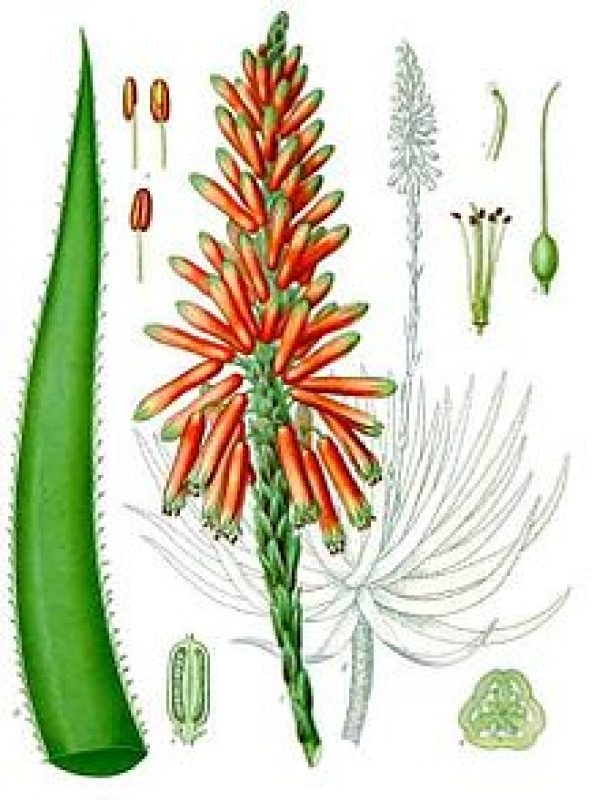
The Aloe Vera plant is characterized by fleshy leaves, identifiable by the presence of a thick cuticle and small spines along the margin.
Its inflorescence, which develops between February and March, grows along a remarkably large vertical axis and bears flowers arranged in clusters, pendulous and yellow in color.
The fruit develops from the flower, a capsule that is not used in Aloe Vera preparations, however.
Aloe Vera cultivation: everything you need to know
Cultivation Techniques:
Regarding cultivation techniques, it should be noted that, obviously, a “commercial” crop must take into account very different considerations from those of a hobby or home cultivation.
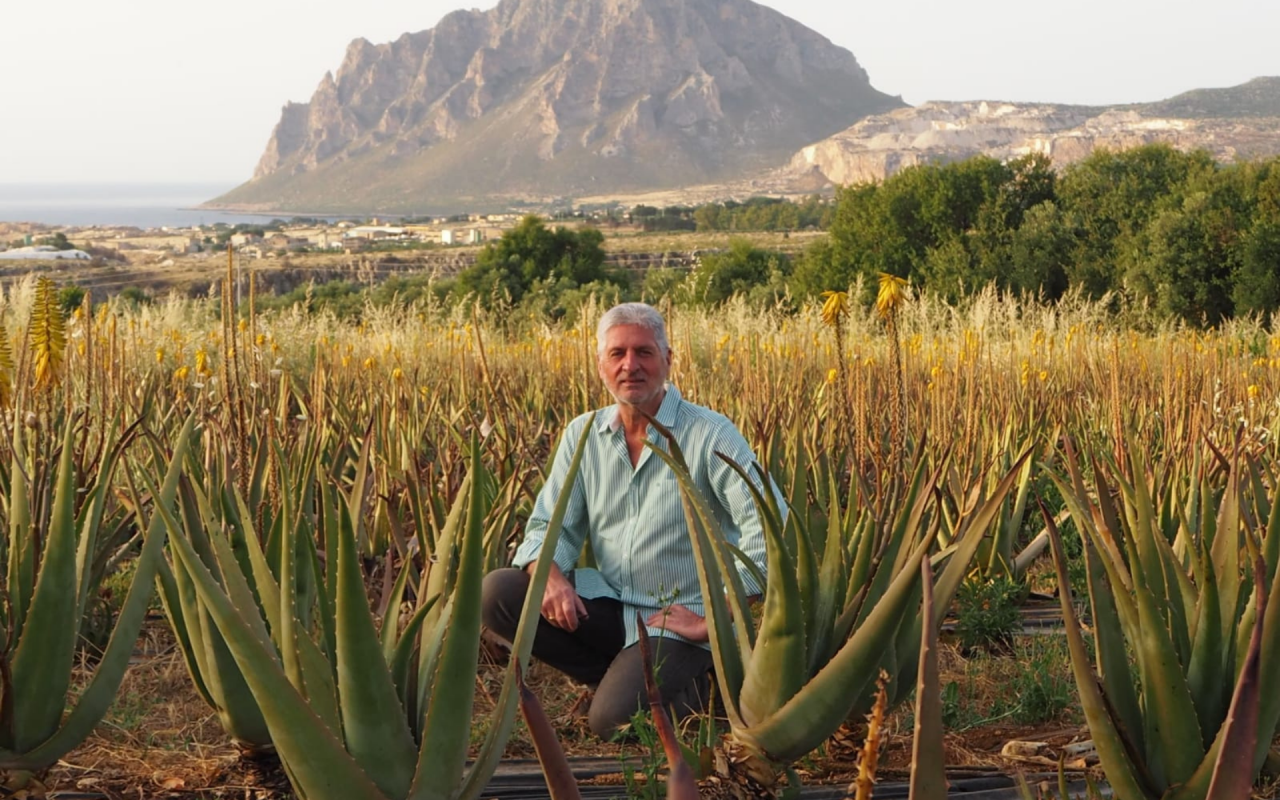
We chose to grow in rows, leaving enough space between the rows for the tractor to pass through, and this proved very important both for weeding and for harvesting.
Our experience has also led us to use the technique of mulching, that is, covering the soil around the plants with material to limit the growth of weeds and also to reduce evaporation during the hottest months, thereby reducing water requirements.
Irrigation 🚰
Aloe Vera is a plant that theoretically would not need much water; in fact, succulents are more likely to deteriorate from excess water than from a lack of it. However, as mentioned above, industrial cultivation involves issues that are quite different from those of home growing, and therefore during the summer months we are forced to water the plants at least once a week, preferably at night to reduce evaporation.
Soil type 🚜
As for the type of soil, it is very important that it be well drained to prevent waterlogging, which would damage the plants, and that it have received good basal fertilization before planting, while under normal management there is no need to apply any particular fertilizers.
Flowering 🌷
The flowers of Aloe Vera develop between February - March, at the top of a very long stem (which can reach up to 120 cm) and are yellow for Aloe Vera and red for Aloe Arborescens.
Each Aloe species develops a characteristic inflorescence, both in terms of color and shape, which may be simple, branched, or in a cluster.
Aloe plants, being self-sterile, reproduce through cross-pollination. They therefore need to be near other Aloe plants of the same species to reproduce.

Pests 🐛
This crop does not present any particular problems from the point of view of pests; some plants may be attacked by scale insects, but the percentage is too low to justify treatment. Snails can also be considered pests of Aloe, but even in this case, except in particular years or situations, these are not infestations requiring targeted treatment.
Temperature and Sun Exposure ☀️
Aloe Vera is a type of plant that needs a mild climate to grow at its best, or even to survive.
In fact, it is very important that the plant not be exposed to temperatures below 3° degrees, as its roots could rot, resulting in the death of the plant and its leaves.
Aloe Vera thrives in ideal climatic conditions with a temperature of around 20-25°.
The propagation and reproduction of Aloe Vera
The propagation of Aloe plants can mainly take place in 2 ways, although there is a rarely used third.
The main propagation techniques occur either through asexual reproduction thanks to its offshoots, as it is a plant species that produces basal shoots (the type of plant that develops additional stems at the base of the main stem, forming a clump), or through sexual reproduction thanks to the seed produced by the plant.
Propagation by Offset:
This type of propagation of Aloe Vera occurs thanks to its offsets, which grow in the soil all around the mother plant during the spring.
Offsets are simply shoots that take root and develop attached to the root collar of the mother plant, thus able to acquire the characteristics of the plant itself, a technique used by many plants to keep the species alive.
To carry out this technique, you must first choose and identify a sufficiently large shoot.
Next, the shoot must be separated from the mother plant, taking care to keep the roots intact. It is recommended to use a knife with a sterile and sharp blade to ensure the operation is successful.
Once the offsets have been separated from the mother plant, they should be left in the open air for a couple of weeks and then planted in the soil, thus creating a new plant.

Propagation by Sowing:
If you choose to propagate Aloe from its seeds, you need to be aware of the related difficulties you may encounter.
The seeds of Aloe plants, being Monocotyledons, are highly vulnerable and sensitive to cold and humidity. Great care must be taken with the type of soil used, which must be sterilized to prevent fungi from developing, have a uniform particle size , and have greater humidity than the surrounding air, so that the roots can determine where to anchor themselves and nourish the plant.
The best times for this type of propagation are definitely the spring periods and those immediately after summer.
Another important activity to carry out before sowing is fungicide treatment, which can only be done with specific natural products in the case of Certified Organic Cultivation, such as Sulfur or Copper Salts.
After making sure that the soil is sufficiently moist, the seeds can be scattered and covered with soil; then all that remains is to wait and monitor the proper development of the seedlings.

Propagation from a Leaf:
This last method is certainly the least commonly used, since the chances of it producing roots and growing healthily are low, as aloe vera leaves contain a high percentage of liquid and tend to rot before producing roots.
However, if you want to try this method, you must make sure to:
- Find a sufficiently long Aloe leaf (at least 10 cm)
- Cut the leaf at the base with a clean and sharp knife, trying to separate it from the base of the plant with a diagonal cut
- Place the leaf in a warm place for long enough for a callus to form on the cut part, which will help the leaf protect itself from external agents, reducing the risk of it becoming infected by the soil
- Insert the Aloe leaf into the soil with the cut end facing downward

Organic Aloe Vera: what changes compared with conventional cultivation
The organic cultivation of Aloe involves some precautions compared with conventional cultivation. In fact, to be certified organic, it must comply with EC Regulation 834/07 which reduces the minimum exploitation natural resources (soil, water, air) in favor of sustainability.
In fact, it requires that none be used synthetic chemical substances such as fertilizers, insecticides, and herbicides, fungicides and pesticides generally.
If necessary, substances of natural origin, such as specially selected plant extracts, insects, and minerals which, when dispersed over the soil, modify its chemical and physical characteristics, helping to create a more protected environment for our plants.

Where to grow Aloe Vera:
Aloe Vera can be grown outdoors, by planting it in soil with suitable characteristics, or in a greenhouse using appropriate pots.
The choice is certainly determined by the type of climate in which you are located: with a warm or temperate climate such as the Mediterranean climate, we could choose between indoor or outdoor cultivation, whereas with a somewhat colder climate such as the Continental climate, we would be forced to opt for indoor cultivation.
Let's discover together the differences and distinctive features of these 2 types of Aloe cultivation..
Growing Aloe Vera in soil (outdoor):
Growing Aloe Vera outdoors, or outdoor, is more recommended than growing it in a greenhouse, as it has been demonstrated that the development of certain active compounds and phytocompounds in the plant is correlated with the amount of light the plant receives.
Moreover, in an enclosed environment such as a greenhouse, the air quality is certainly different from what we can find in an open ecosystem.
However, as mentioned earlier, you need to pay attention to the type of soil used to grow Aloe. One of the most important factors is having soil with good drainage capacity, preferably soil with a sandy component.
Another thing to pay attention to is the amount of water: too much water creates a real risk that the roots may rot due to waterlogging.
Growing Aloe Vera in a greenhouse (indoor):
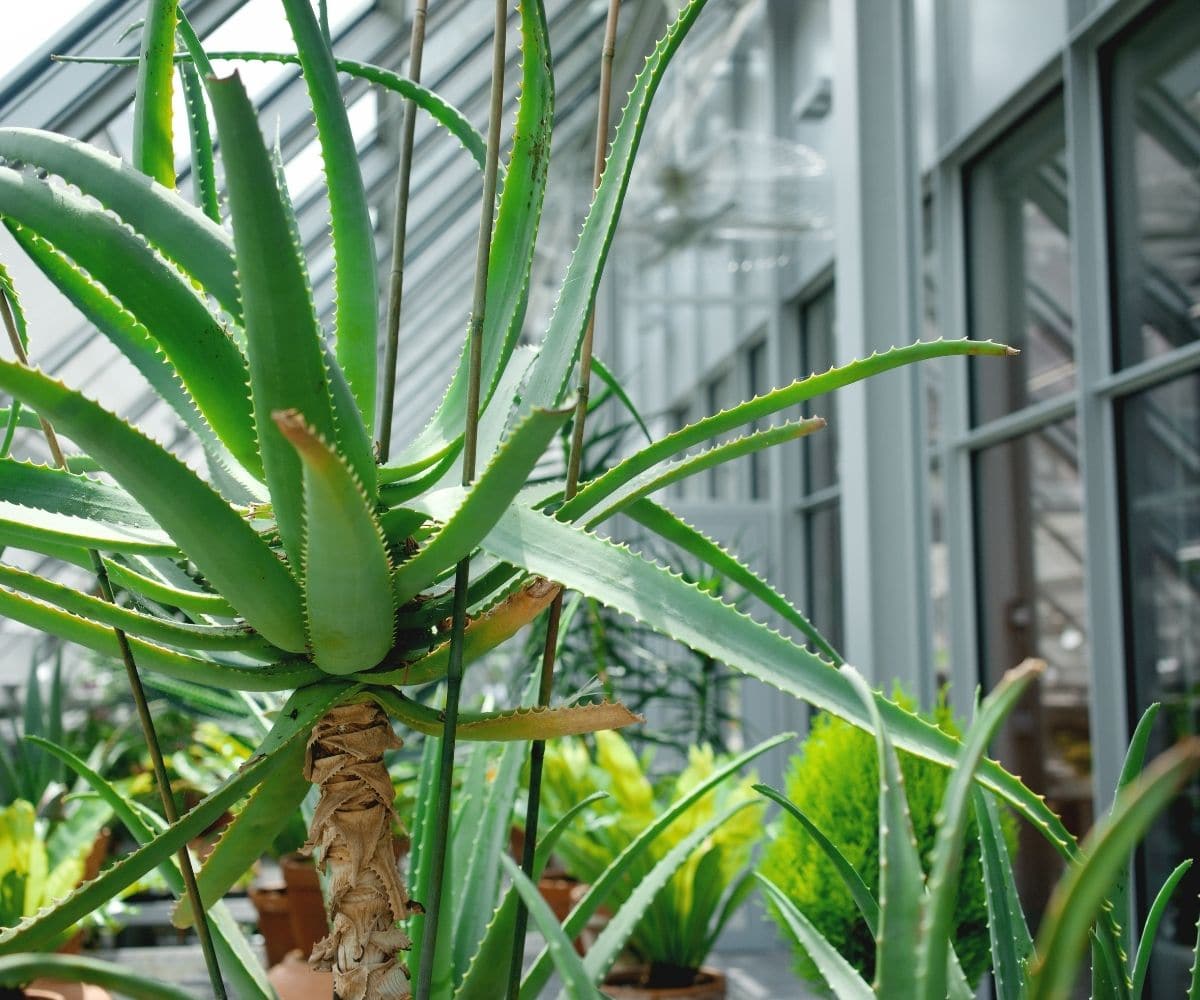
Growing Aloe Vera in a greenhouse has become more widespread in recent years because it allows for more controlled and less demanding cultivation than traditional outdoor growing.
However, using pots and the air quality created in an enclosed environment do not allow vigorous, high-quality growth of the plant or the related optimal development of its active compounds.
For growing Aloe in a greenhouse, you should first get pots that are generally wider than they are deep, since the roots of Aloe Vera do not grow very deep.
For cultivation in pots as well, having well-drained soil is of fundamental importance, as the roots tend to rot in very damp soil. We recommend using potting soil for succulents (cacti), or regular potting soil with added sand to improve its drainage capacity and clay pellets at the bottom of the pot to prevent water stagnation.
Another factor to consider for optimal plant growth is that Aloe Vera depends on light to thrive: we should make sure it receives the right amount of light each day.
Aloe Vera cultivation in Italy:
The cultivation of Aloe Vera in Italy is a relatively recent activity, having developed no more than 30 years ago.
Indeed, although Italy is a country famous for its primary sector and the biodiversity of cultivated plant species, Aloe cultivation was certainly not an integral part of Italian agricultural culture, compared with that of neighboring countries such as Spain or Greece and until a few decades ago it was almost impossible to find an organized cultivation of Aloe.
However, we can proudly say that we at Vonderweid were one of the first companies to believe in the potential and benefits that this plant can provide.
It is in fact since as far back as 1997 that we have been cultivating Aloe Arborescens and Aloe Vera in Sicily, in the open air, following the principles of Organic Farming.


