


Thanks to its various benefits, Milk Thistle has been widely used in herbal medicine since ancient times for its liver-protective and regenerating properties on liver cells.
The properties of Milk Thistle are due to the presence of flavolignans (silybin, silydianin and silicristin) and flavonoids.
Let's discover the benefits and properties of this plant together.
Milk Thistle, what is it?
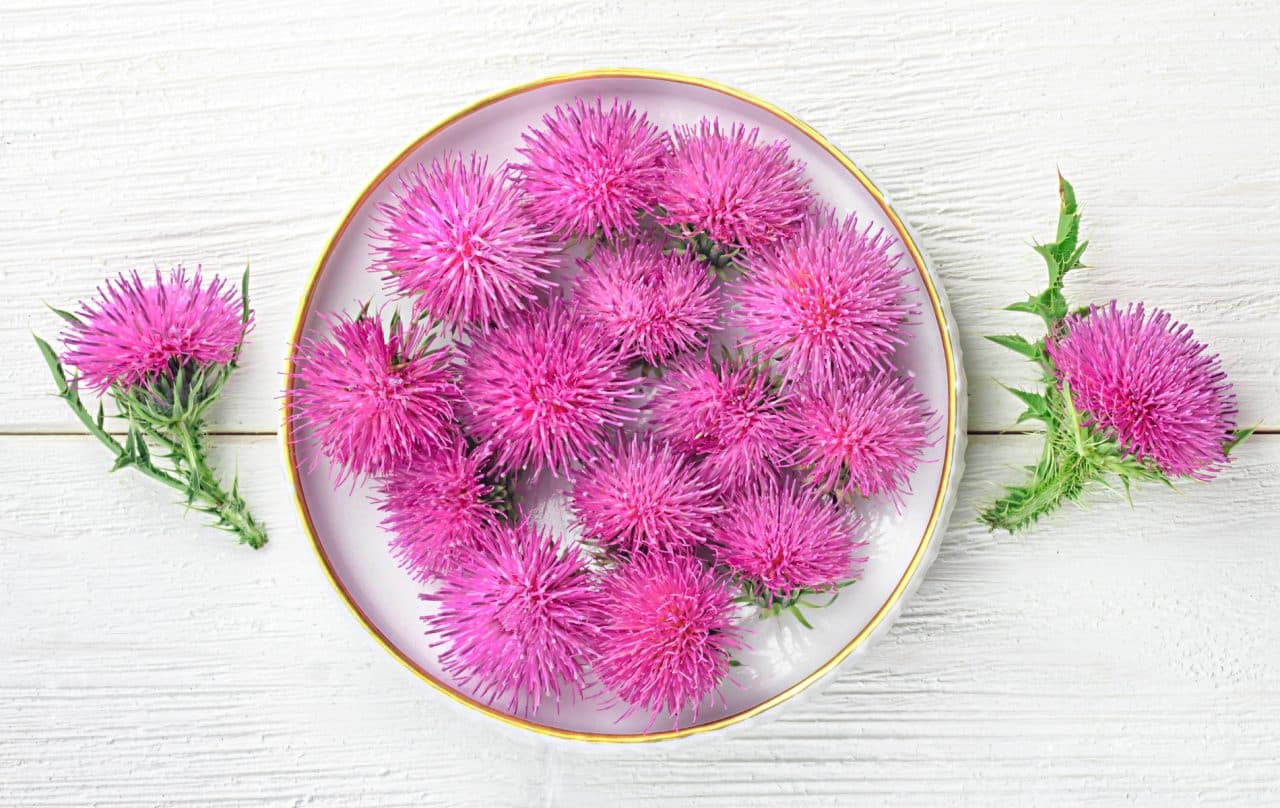
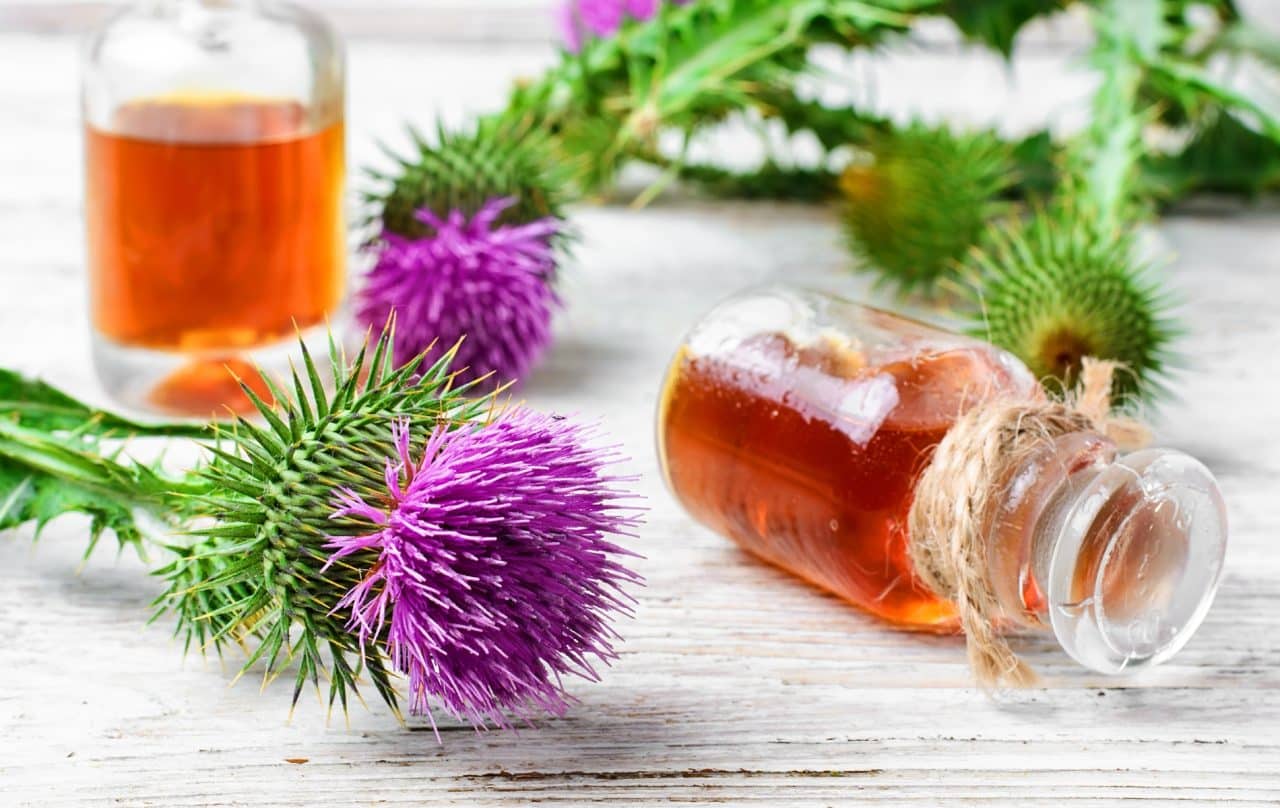
The Milk Thistle or Lady's Thistle (scientific name Silybum marianum) is a herbaceous plant belonging to the Asteraceae family and is widespread in several countries of the Mediterranean basin. It is characterized by its bright purple flower.
It is said that while Joseph and Mary were fleeing from Herod with the infant Jesus, some drops of milk fell from Mary's breast onto the thistle leaves as she nursed Jesus, staining them white: hence the name milk thistle.
The biologically active substances extracted from milk thistle seeds are silybin, silicristin and silydianin. Its seeds are used to prepare capsules, extracts, powders and tinctures to take advantage of the liver-protective and liver-cell-regenerating properties.

Milk Thistle, what does it contain?
The Milk Thistle, or Lady's Thistle, contains:
- Flavolignans (components that form a a phytocomplex called silymarin, mainly consisting of three molecules: silybin, silicristin and silydianin)
- Lipids with a high concentration of unsaturated fatty acids: linoleic, oleic, palmitic acid.
- Tocopherol, sterols and essential oil
- Tannins
- Bitter substances
- Proteins, tyramine, mucilages
- Flavonoids: apigenin, kaempferol, quercetin, catechic tannins
- Sitosterol, fumaric acid, triterpene acetate, polyacetylenes
What are the benefits of Milk Thistle?
Milk Thistle is considered a plant that supports the liver and is therefore used to treat liver disorders, especially due to the action of the Silymarin it contains, which has notable antioxidant, anti-inflammatory, cytoprotective and hepatoprotective properties.
It also plays a role in the process of hepatocyte regeneration, stimulates protein synthesis and also has an antioxidant against free radicals caused by alcohol and toxic substances.
This plant is also used to improve digestive processes, increase blood pressure and help control blood sugar.

Milk Thistle and Silymarin:
Several studies seem to demonstrate that silymarin is effective in various types of liver disease, such as cirrhosis, chronic hepatitis and fatty liver disease.
It is also indicated for various poisonings caused by toxic chemicals and poisonous substances or alcohol, with improvements in liver enzymes such as transaminases and gamma-GT.
The hepatoprotective action of silymarin would appear to be exerted through different mechanisms of action, which we will explain below. First of all, As mentioned above, Silymarin is a phytocomplex, mainly consisting of three molecules: silibinin, silychristin and silydianin, which perform various useful functions.
- The Silychristin and Silydianin contained in it can protect the liver from substances that are toxic to it (such as alcohol and toxins), through a modification of the cell membranes of hepatocytes. This modification would, in fact, prevent toxic substances and toxins from penetrating the liver cells.
- Silibinin, on the other hand, exerts its hepatoprotective action by reducing the production of superoxide anions by Kupffer cells and by inhibiting the synthesis of leukotrienes a liver level. Therefore, silybin plays an antioxidant and free-radical-scavenging role.
It can be stated that silymarin is one of the most effective hepatoprotective substances known, to the extent that in 1998 the European Commission recognized the use of standardized milk thistle fruits containing 70-80% silymarin for liver disorders and diseases. Today, silymarin-based products are used throughout Europe, and the dosage may range from 240-360 mg/day to higher concentrations depending on the condition.
Moreover, a recent study also demonstrated that silybin and silicristin are capable of exerting a protective effect on the kidneys from cellular damage caused by paracetamol, vincristine and cisplatin, through an increase in the proliferation rate and stimulation of the synthesis of proteins and DNA and increased activity of lactate dehydrogenase in kidney cells.
Milk Thistle Mother Tincture
The mother tincture (MT) is a liquid preparation obtained by extracting the fresh drug using percolation o maceration with a suitable solvent.
The solvent most commonly used in mother tinctures is a hydroalcoholic solution (water + alcohol) with a variable concentration (most often between 60° and 80°), depending on the solubility of the active compounds to be extracted.
The Milk Thistle mother tincture it is an herbal preparation extracted from the leaves and fruits of the plant, which are macerated at a 1:10 ratio in a solution of water and Alcohol. It is an herbal remedy considered useful for its sedative and antidepressant properties thanks to its beneficial effects on the nervous system.

Glyceric Macerate of Milk Thistle: what is it?
In recent years, Mother Tinctures extracted with Vegetable Glycerin instead of Alcohol have become increasingly popular, making them better in several respects. Moreover, since Glycerin is a less powerful and therefore less extractive solvent than Alcohol, innovative extraction techniques such as Ultrasound Extraction are used.
Ultrasound extraction is an innovative, clean, easy-to-perform and rapid extraction technique that makes it possible to extract active compounds from plants, particularly medicinal plants, and produce high-quality phytoextracts, by harnessing the exclusively mechanical action exerted by the cavitation effect produced by sound waves.
The Alcohol-Free Mother Tincture of Milk Thistle is obtained by hydroglyceric maceration of Milk Thistle seeds, always with a 1:10 ratio, and is an innovative type of Mother Tincture which, having been obtained through the ultrasonic process, makes it better from several points of view.
At Vonderweid, thanks to our twenty years of experience in the field of Food Supplements and after a lengthy research and development in our laboratories for the production of Alcohol-free Mother Tinctures, we managed to obtain a product with the desired characteristics.
Our alcohol-free Mother Tinctures are classified as Food Supplements and are regularly notified to the Ministry of Health.
The properties of Milk Thistle:
The Alcohol-Free Mother Tincture of Milk Thistle, or Glycerine Macerate of Milk Thistle, is a natural remedy for which the following properties can be claimed:
- Support for digestive function
- Support for liver function
- Support for the body’s cleansing functions
All these claims are regulated and approved by the Italian Ministry of Health for their physiological effects, intended to “optimize the body’s functions within homeostasis”.
Milk Thistle, how many drops should you take?
For taking Milk Thistle drops, we recommend using 40 drops dissolved
in a glass of water, 1-3 times a day. For children, it is recommended to halve the doses.
Let us always remember: Do not exceed the recommended daily dose. Keep out of reach of children under 3 years of age. Food supplements should not be understood as substitutes for a varied, balanced diet and a healthy lifestyle, and we always recommend your doctor’s or nutritionist’s opinion before taking it.
The advice is therefore always to consult your doctor before starting to take Mother Tincture of Milk Thistle, then consulting a qualified herbalist or phytotherapy expert to determine how to take it and in what quantities.


