


The St. John's wort plant is part of traditional medicine because of its phytotherapeutic properties, particularly its antidepressant and antiviral properties.
The origins of its use as a medicinal herb are very ancient, and traces of it can be found in writings from many centuries ago.
Let's discover its benefits and how it is used.
St. John's wort plant, what is it?
The St. John's wort plant, also known as Hypericum Perforatum, or also known as St. John's wort, is a perennial medicinal plant belonging to the Clusiaceae family and the Hypericum genus.
This type of plant prefers sparse, sunny woodlands, outdoors year-round, as it is not afraid of the cold. Originally from the British archipelago, it is now widespread throughout all regions of Italy and the rest of the world and prefers sunny or partially shaded and dry locations, such as abandoned fields and derelict areas.
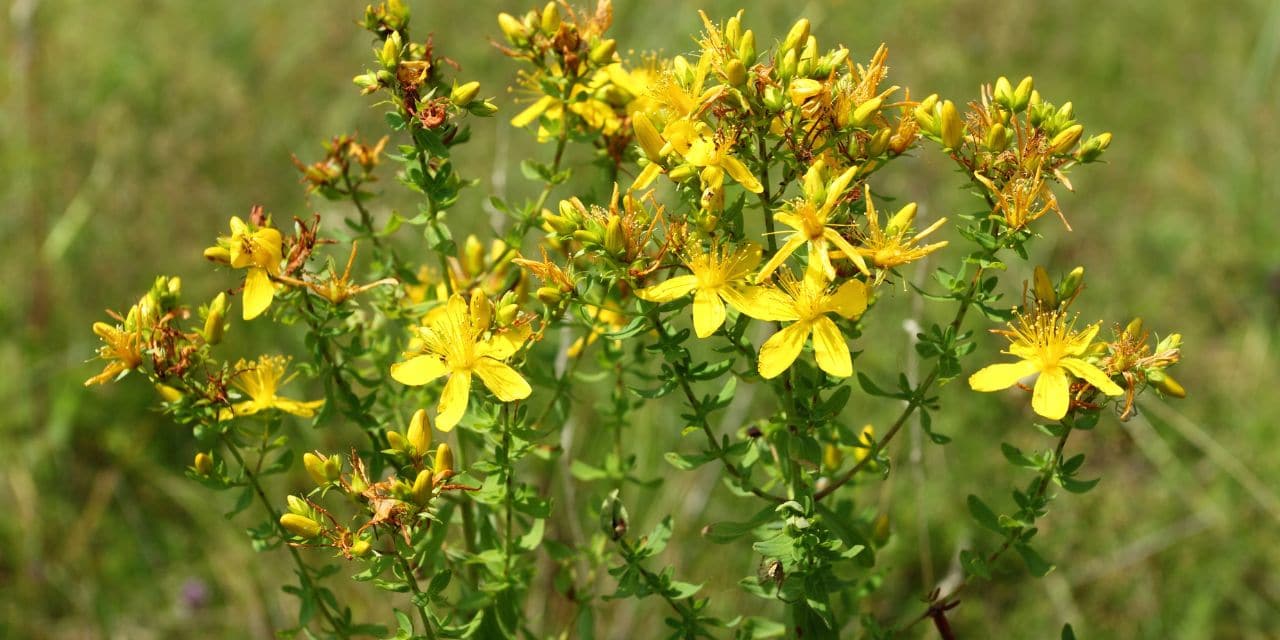
St. John's wort, what is it used for? What are its benefits?
The St. John's wort plant is known to be one of the best natural antidepressants, useful for states of mild depression, to relieve mood swings, to promote relaxation and sleep and to aid digestion.
In a review of studies up to 2008 conducted by the Cochrane Collaboration, one of the most authoritative scientific institutions in the world, it was concluded that “current evidence suggests that hypericum extracts are superior to placebo in the treatment of major depression, with efficacy similar to that of conventional antidepressant drugs but with significantly fewer side effects”
The main therapeutic properties of St. John's wort are found in the flowering tops of the St. John's wort plant, which are rich in flavonoids and have an antidepressant and sedative action. These substances, hypericin, rutin, quercetin and hyperoside, have a pronounced antidepressant and sedative action and are obtained from the dry extract or from the Mother Tincture of St. John's Wort.
The leaves of St. John's Wort also contain important compounds such as tannins, caffeic acid, and essential oils.
In addition to calming states of anxiety, of nervousness and insomnia, the active compounds it contains are able to increase serum serotonin levels, similarly to certain antidepressant drugs, rebalancing mood.
The phytocomplex present in St. John's Wort acts predominantly on the central nervous system by inhibiting the presynaptic reuptake of serotonin and other neurotransmitters, including noradrenaline, dopamine, and GABA, gradually increasing the receptors for these neurotransmitters over time.
The mother tincture is the most commonly used St. John's wort remedy because it contains all the plant's active compounds at the same concentration they have before refinement.
Mother Tincture of St. John's Wort
The mother tincture (MT) is a liquid preparation obtained by extracting the fresh drug through percolation o maceration with a suitable solvent. The solvent most commonly used in mother tinctures is a hydroalcoholic solution (water + alcohol) with a variable strength (most often between 60° and 80°), depending on the solubility of the active compounds to be extracted.
The Mother Tincture of St. John's Wort it is an herbal preparation extracted from the leaves and fruits of the plant, which are macerated at a ratio of 1:10 in a solution of water and Alcohol. It is an herbal remedy considered useful for its sedative and antidepressant properties, thanks to its beneficial effects on the nervous system.

Glyceric Macerate of St. John's Wort: what is it?
In recent years, Mother Tinctures extracted with Vegetable Glycerin instead of Alcohol have become increasingly popular, making them better from several points of view.
Furthermore, since Glycerin is a less powerful and therefore less extractive type of solvent than Alcohol, innovative extraction techniques such as Ultrasound Extraction are used.
Ultrasound Extraction is an innovative, clean extraction technique that is easy and quick to perform. It allows the active compounds to be extracted from plants, particularly medicinal plants, and high-quality herbal extracts to be produced, using exclusively the mechanical action exerted by the cavitation effect produced by sound waves.
The Alcohol-Free Mother Tincture of St. John's Wort is obtained by hydroglyceric maceration of the leaves and fruits of St. John's Wort, always at a ratio of 1:10, and is an innovative type of Mother Tinctures, which, having been obtained through the ultrasonic process, makes it better from several perspectives.
At Vonderweid, thanks to our twenty years of experience in the field of Food Supplements and following a lengthy process of research and development in our laboratories for the production of Alcohol-free Mother Tinctures, we succeeded in obtaining a product with the desired characteristics.
Our alcohol-free Mother Tinctures are classified as Food Supplements and are duly notified to the Ministry of Health.
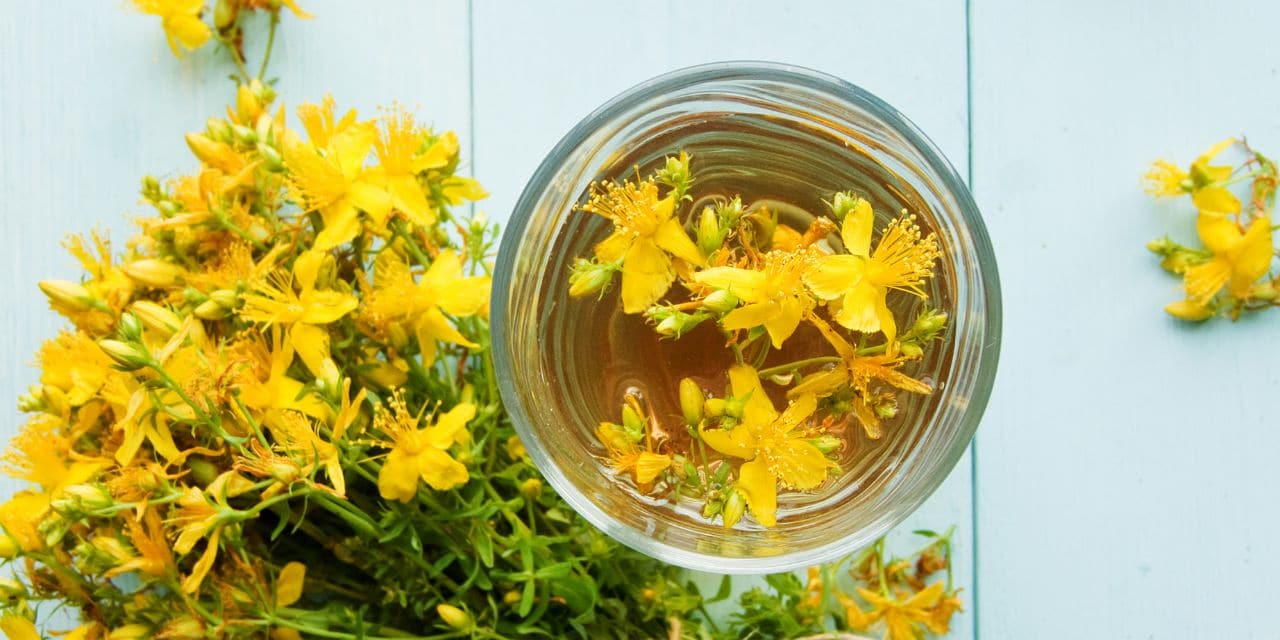
Glyceric Macerate of St. John's Wort: properties and indications
The Alcohol-Free Mother Tincture of St. John's Wort, or Glyceric Macerate of St. John's Wort, is a natural remedy for which the following properties can be claimed:
- Support for a normal mood
- Relaxation
- Mental Well-being
All these claims are regulated and approved by the Italian Ministry of Health for their physiological effects, aimed at “optimizing the body's functions within homeostasis.”
Glyceric Macerate of St. John's Wort: how many drops should you take?
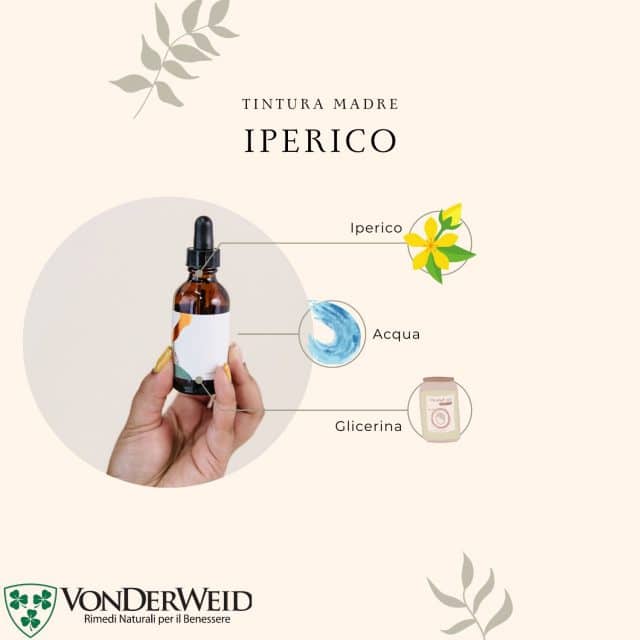
Taking the St. John's Wort Mother Tincture is recommended during periods of intense stress and tension thanks to its beneficial effect on mood and mental energy.
For taking St. John's Wort drops, we recommend using 20 drops dissolved
in a glass of water, 2-3 times a day.
We always remind you not to exceed the recommended daily dose and to keep out of reach of children under 3 years of age. In addition, food supplements should not be considered substitutes for a varied and balanced diet and a healthy lifestyle, and we always recommend your doctor's or nutritionist's opinion before taking it.
The recommendation is therefore to always consult your doctor before starting to take the St. John's Wort Mother Tincture, then turning to a good herbalist or a phytotherapy expert to determine how to take the St. John's Wort tincture and in what quantities.


